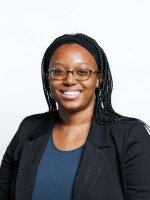
Chuck Egerton, a peace and conflict studies lecturer at UNC Greensboro, never imagined his face would be on something called a “kill card.”
In 2021, an extremist group known as the Terrorgram Collective targeted Egerton after a viral video clip of him was posted in which he was leading a discussion on critical race theory and white supremacy.
The FBI found the so-called kill card on a dark web hit list. It included his name, photo, and address and included threats to murder him and beat, rape, and kill his wife.

“It had a picture of the front and the back of my house and I realized that… that they had really done a deep dive into finding whatever they could find about me,” said Egerton. “And you start to think about should we pull the blinds down at night? Is somebody looking for a long shot at you?"
Faculty across the UNC System are expressing increased concerns that their safety – and that of their family – is at even more risk following the new system-wide policy that all class syllabi be posted in an online database.
“I have heard concerns about doxxing – about identifying faculty and graduate students; where their offices are, where their residences are,” said Beth Moracco, chair of the UNC-Chapel Hill Faculty Council and associate professor of public health. "The climate right now is so volatile, and we've seen physical violence on campuses. I think those concerns are amplified by this policy."
‘We have seen faculty straight up murdered’
Christopher Petsko is an assistant professor of organizational behavior at UNC-Chapel Hill. He teaches classes that sometimes discuss stereotyping and prejudice in the workplace.
When a conservative watchdog organization got ahold of Petsko's syllabus last semester, it honed in on that element – accusing Petsko of filling his class with so-called "DEI garbage" that went against executive orders from President Donald Trump.
Numerous accounts – most of them anonymous – started posting and sending Petsko messages. Some called him a Marxist, others called for him to be fired. Others went and found a picture of Petsko and his partner and posted homophobic comments.
The harassment became so overwhelming, Petsko decided to leave social media altogether.
"When they push against you hard enough, it does actually scare you – and it doesn't just scare you, it scares the people around you," Petsko told WUNC last semester. "... I have deliberately made some efforts to mute myself in certain ways, because I don't want to have to deal with this backlash. It's a distraction and it's scary to my colleagues."
In announcing the syllabi policy in December, System President Peter Hans said “more transparency is the right response to greater scrutiny.” That system-wide policy negated UNC-Chapel Hill’s previous legal position that syllabi were not public records.
The syllabi databases created by universities reportedly won’t include faculty names or class locations, but UNC Faculty Assembly Chair Wade Maki says that hasn't eased professors' anxieties.
"Unlike our legislature, our board, our administrators, or most working folks – we work in an open environment," Maki, also a senior lecturer of philosophy at UNC-Greensboro, said. "That means our names, photos, locations, our class schedules, and where you can find us are already posted publicly."
"When I talk about working in an open environment – and we've seen this, we have seen faculty straight up murdered, including at Chapel Hill – it's that first strike,” Maki said. “That person who just shows up wanting to do harm because they're really angry about something and no one knew they were coming.”
Expose, harass, surveil
Faculty have long faced harassment from people on and off-campus, Maki said, but these days they are increasingly being surveiled and targeted. Fatal attacks – like recent campus shootings at Brown University and UNC-Chapel Hill – have more than doubled in the past four years. That’s according to national data from the Gun Violence Archive and reported by the Trace.
Online, watchdog groups and activists say they are "exposing" professors – through undercover videos, social media blasts, and watchlists – and mobilizing their supporters against them.
Egerton shared his story – where he was targeted via a “kill card” – at a UNC Greensboro forum on academic freedom this past fall. He told WUNC he sees the syllabi regulation as a kind of doxxing.

"Even though we were told to remove any identifying information from the syllabus, that's pretty worthless,” Egerton said. “Anyone who sees the title or the number of the course can cross reference it. I've heard from some colleagues that they have actually removed things from their syllabus and from their teaching that they thought would be controversial."
Maki, the Faculty Assembly Chair, asked the UNC System if there could be an exemption that would allow faculty facing active harassment to remove their syllabi from the searchable database. UNC
System administrators denied that request.
"They felt that would be an exception that swallowed the rule," Maki said. "We did suggest that, because we recognize this is not a concern that is equally distributed. It is very unlikely that anyone teaching computer science is going to have their syllabus be thrown online to attack. If you're teaching about race and gender, we know that you're more likely to be targeted."
Faculty 'safeguard' plans
In an op-ed for the News and Observer in December, Hans said the UNC System would do everything it could to "safeguard faculty and staff who may be subject to threats or intimidation simply for doing their jobs."
Hans denied WUNC’s request to further discuss faculty safety when the syllabus policy was announced.
UNC-Chapel Hill interim provost Jim Dean told concerned professors at a fall faculty executive committee meeting that individual institutions – not the UNC System – would "almost certainly" be in charge of handling physical threats to their campuses.
This expectation comes as universities across the state are facing immense budgetary pressures – from the NC General Assembly’s lack of a state budget to lingering effects of federal research funding cuts.
WUNC asked the UNC System if it had initiated or allocated any funding toward faculty safety that is tied to the syllabi regulation. In a statement, UNC System spokesperson Andy Wallace said the regulation falls under the System’s “normal law enforcement preparedness and faculty/staff outreach and awareness efforts.”
“The safety of UNC System faculty, staff and students is our highest priority,” the statement said. “Campus public safety teams across the System continuously monitor potential threats and maintain contingency plans to help ensure a safe environment for everyone on our campuses.”

UNC-Chapel Hill would not make anyone available for an interview on the subject of faculty safety and the syllabus policy. Instead, the university sent statements from UNC Police Chief Brian James and Angel Gray, the director of the Office of Behavioral Assessment and Management.
“UNC Police works closely with faculty and staff who report concerns about harassment, threats or personal safety, including incidents originating online,” said James, in the statement. “They provide individualized safety consultations, threat assessment and response coordination, and work with campus partners to evaluate risks and determine appropriate protective measures.”
“Our office assesses these situations and develops tailored interventions addressing the person of concern, the environment and the potential target, aimed at preventing acts of violence,” said Gray, in the statement.
‘This institution doesn’t mind if you’re picked off one by one’
In an attempt to fill what professors see as a security void, faculty across the UNC System are coming up with their own safety and threat prevention plans ahead of the syllabus database launch later this year.
Abigail Hatcher is an adjunct professor of public health at UNC-Chapel Hill and the interim vice president of the North Carolina chapter of the American Association of University Professors (AAUP). The organization has been holding virtual workshops to help faculty prepare syllabi for what they call the "doxxing database."
Hatcher said the training shows faculty how to align with the new regulation without offering information that might put themselves or their students at risk. In addition, the group has drafted an online sample syllabus template, created a "syllabus committee," and launched a legal hotline last fall where faculty can speak with attorneys for additional guidance.

The NC AAUP is also in the midst of creating a “prevention and response plan” for faculty who experience online threats.
“I actually think we have a lot of resources and tools to push back against (online threats and intimidation) if they were only outside actors,” said Hatcher.” But when it is your own dean, your own provost, your own general counsel – the people who are within your own system that are hastening policies that welcome outside threats – those kinds of actions are doubly harmful in terms of our ability to do our jobs well.
“What it’s saying is not only are these external pressures riling around in our general society right now – but this institution will not come to your aid,” Hatcher continued. “This institution doesn’t mind if you are picked off one by one. You’re not important to us in ways that make us do the hard work of getting good plans in to place.”
Maki, the Faculty Assembly Chair, says he has been meeting with campus police chiefs and UNC System security officers to ask how they plan to keep faculty safe from harassment on and off campus. He said it was a “healthy exchange,” and faculty voices were heard.
‘I fault those that are making the walls move in’
When Egerton alerted UNC Greensboro police to the “kill card” threat back in 2021, they offered to escort him whenever he was on campus.
Leaders of the Terrorgram Collective were arrested by the FBI in 2024 and charged with soliciting hate crimes, soliciting the murder of federal officials, and conspiring to provide material support to terrorists. Dallas Humber, of Elk Grove, California was sentenced to 30 years in prison in December. Others are still awaiting trial.
Egerton is on an email list with other Terrorgram victims that regularly sends updates about the case. In the last year, the FBI contacted Egerton to let him know a newer variation of the “kill card” is continuing to circulate on the dark web.
Still, Egerton says it’s important for him to keep teaching the truth and he has no plans to change how he does so.
“We’re really about principle, we’re about learning. We’re about sharing the truth and developing kids that will learn how to critically think,” Egerton said. “I fault those that are making the walls move in and crushing access to truth and to all different perspectives on issues.”
WUNC partners with Open Campus and NC Local on higher education coverage.