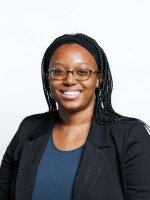
Samuel Scarborough knew something was different when he stepped into the Black Convocation at UNC-Chapel Hill earlier this fall.
There were not nearly as many Black students there as in the past. It was a trend he had also noticed other places on campus.
"I've seen the drop offs in my classes. I've seen the drop offs in some of our on campus cultural events. I've seen the drop offs in just walking around campus," Scarborough said. "I've seen a lot less Black students and that's something that really challenges – not only mine – but everyone's as Black students sense of belonging here."

The annual Black Convocation in the Stone Center is designed to bring Black students together to build community. Students sing songs, play games, and listen to presentations from the Black Student Movement and other organizations on campus.
Scarborough, a junior, began college the year the U.S. Supreme Court ruled that UNC-Chapel Hill and other universities couldn’t consider race in admissions.
Two years later, UNC-Chapel Hill's enrollment of several historically underrepresented groups has noticeably declined, with Black student enrollment falling the most.
The number of Black students made up 7.8% of last year’s class, and the same level this year. That’s down from 10.6% before the Supreme Court ruling.
In 2023, Scarborough said he was one of four or five Black students in his classes. Now, he considers himself lucky if he's one of two.
"Being one of one is a drastic shift. Although that might not seem a lot, a decline of one to two people in the classroom, it does mean a lot in your day-to-day experiences," Scarborough said. "This university that is supposedly representing this diverse state of North Carolina only has less than 8% of its incoming enrollment – both this year and last year – being Black students, even though we make up roughly 20% of the state. I think that's devastating and I think that's a contradiction of values."
Scarborough is not alone in feeling isolated.
UNC-Chapel Hill’s student body president, Adolfo Alvarez, said students have also been telling him they’re feeling the effects of the diminishing Black community on campus.
"That's a problem that people feel less encouraged to find community at Carolina," Alvarez said. "That just does the whole opposite of what colleges are built for. They're meant to build character; they're meant to help you grow personally. And for a lot of people, their identity is also part of who they are as people."
‘Not the right message to send’
Following the end of affirmative action, campuses across the country have enrolled fewer Black students in their incoming classes. James Orr, UNC-Chapel Hill’s senior vice provost for undergraduate student success, said the university’s decline of underrepresented students is "on par" with other institutions.
"We have the responsibility to admit, to enroll, and graduate the best and brightest North Carolinians across the state," Orr said. "Regardless of their race, regardless of their gender, regardless of all of those different variables."
Orr started at UNC-Chapel Hill this past July. The university created his "student success" position following a UNC Board of Governors mandate that forced all public universities to remove diversity, equity, and inclusion initiatives.
Chancellors across the state collectively cut nearly 60 DEI-related positions and at least seven central offices last year. UNC-Chapel Hill administrators eliminated the most, axing 20 roles and six DEI offices across the university.
In its first meeting of the fall semester, the UNC-Chapel Hill Board of Trustees celebrated this metric, calling it an "unwavering focus on excellence."
Only one trustee, Ralph Meekins, openly criticized the moves.

"I look around the room, and I see we look a lot alike and I think we think a lot alike," Meekins said at the September meeting. "We spent millions of dollars fighting for the right to consider race in some fashion on a holistic basis. Prior boards fought for that. I was proud of that and still proud of that. The Supreme Court has spoken, so nothing we can do about that, but I didn't think we needed to celebrate it."
Meekins later told WUNC he’s spoken with a lot of Black students on campus who don’t feel like they are welcome at UNC-Chapel Hill.
"That’s not the right message to send, because they are. And in fact, we need to make greater efforts to provide them with a safe, comfortable, wonderful experience here on campus," Meekins said. "When you start taking down familiar places and spaces where certain populations know they can go and be safe and secure, it concerns me."
‘I feel like I need to be a voice for Black people’
Sophomore Jayden Pupoh grew up in predominately white spaces all her life. She's biracial and is used to being the only Black woman in the room.
She says she had pretty low expectations entering UNC-Chapel Hill, but it's getting even harder to feel like she belongs – especially in her classes.
Pupoh said there's been several times when topics involving race come up and she's felt pressured or even directly asked to speak up as the only Black student in her classes.
"I often feel like I need to be a voice for Black people," Pupoh said. "It gets frustrating and it gets tiring."
Scarborough agrees. He said it's been emotionally draining having to choose between being a student or an "educator" in his lectures.
He grew up in the Triangle area, hearing stories from the griots in his community about Black Durham and Chapel Hill.
He knew when he enrolled at UNC-Chapel Hill that he’d have to face the university’s troubled history with the Black community – from the gentrification of the Northside neighborhood to having to walk down Cameron Avenue, a street named after one of North Carolina’s largest slaveholders and plantation from which Scarborough’s family descended.
"I could be having a conversation about the in-depth racial history of Carolina specifically affecting Black students who are descendants of people who were enslaved by the 'founders' of this place. And that experience just is not going to relate to a white student that's from out-of-state that has no connection to this place," Scarborough said.
"That isn't to say that those differences are invaluable and that there aren't things that we can learn from each other," Scarborough continued. "It's just more so that decline in the number of students that can relate to me, it definitely affects my in-class experience."
Finding Community in shared spaces
There are some spaces on campus, however, where Pupoh and Scarborough have been able to relax and feel welcomed. They are both active members of UNC-Chapel Hill's Black Student Movement (BSM).
The Upendo Lounge was the BSM’s on-campus headquarters for 52 years. On any given day, students used the room to hold meetings, Gospel choir practices, or as a 'third place' to discuss their classes, study, or watch movies.

"The general vibe of Upendo is in its name – it's Swahili for love," Scarborough said. "A place that's loving and affirming of not only Blackness but also just Black students having a space at this campus to build community. Not only with themselves, but also with other groups as well."
Or at least that's what the space was, until UNC-Chapel Hill administrators decided to take it away to align with guidance from the Trump administration.
This past July, U.S. Attorney General Pam Bondi sent a memo that threatened to defund any universities continuing DEI practices. UNC-Chapel Hill's federal research funding has already declined by more than $110 million dollars this year, along with the Trump administration revoking at least $38 million worth of the university’s grants.
A section of Bondi's memo specifically called "BIPOC-only" lounges discriminatory, saying identity-based spaces create "a perception of segregation and may foster a hostile environment."
The politically charged and changing federal landscape has tasked UNC-Chapel Hill leadership, specifically Chancellor Lee Roberts, with balancing the needs of students and threatening mandates from the Trump administration.
On one hand, Roberts’ administration has acceded to Trump’s demand to end anything the federal government deems "DEI-related," using the threat of further research funding cuts as leverage. That includes the elimination of offices, reassigning administrators, and – most recently – taking away the Upendo Lounge.

In other ways, Roberts has pushed back against those same pressures and stood up for the university’s independence.
He told faculty at a council meeting last month that UNC-Chapel Hill would not be signing on to the Trump Administration’s "Compact for Academic Excellence in Higher Education" because, according to Roberts, "some parts of the compact... would be difficult or impossible for us to do."
When asked how he navigates the political realities of the federal government with what’s best for the university, Roberts told WUNC he’s always trying to maintain a "strong dialogue" with the Trump administration.
"We receive $1.5 billion in federal research funding annually; we’re in the top 10 nationally," Roberts said. "So that requires, I think, all of us here in leadership positions to make sure that we’re maintaining a really strong dialog with policymakers in Washington and that’s what we’ll continue to do."
‘They never truly cared about Black students’
Alumna Julia Clark said she believes communication between UNC-Chapel Hill administration and Black student leadership has been eroding under Roberts’ tenure.
She attended Carolina during the Black Lives Matter movements of the early 2020s, when universities were bolstering their diversity programs.
This included the UNC Board of Governors, which mandated every public university in North Carolina to have designated DEI offices and jobs. At the time, UNC-Chapel Hill also launched a separate "your voice matters" campaign where the campus could share its thoughts on anti-Black violence.
The university, however, still had its share of issues where the Black community felt undervalued – from the Silent Sam controversy, the university’s pandemic response, to the UNC-Chapel Hill trustees’ botched hiring of Nikole Hannah Jones.
Clark, who was president of the BSM her last year at Carolina, said the onus was on students to use their collective power to advocate for resources. She remembers having standing appointments with the Chancellor's office every semester where she’d share concerns from Black students.
Administrators never fully addressed the list, she said, but at least then students felt like they had a voice.

"I think now UNC-Chapel Hill has decided they don't need to listen to students," Clark said. "They don't need to listen to any stakeholders other than the Board of Trustees, Board of Governors, and the current administration."
"Now that the tide of the nation has changed and shifted towards white supremacy, I think the university feels comfortable enough to sit in their truth," Clark continued. "That they never truly cared about Black students because we deserved that (change). They cared about us because they needed to fix their image or they could benefit from us."
Scarborough echoed this, saying when he or other BSM leaders come to administrators about maintaining Black existence or spaces on campus, they feel ignored.
Since taking on the role of senior vice provost for undergraduate student success this summer, Orr said he’s been holding "listening tours" with various groups, including the BSM and the Carolina Alumni Black Issues Council. He said the Black alumni he spoke with were "excited" about their Carolina experience.
Clark still gives advice to Black students on campus today. She said it’s discouraging to see every class after hers get smaller.
"We’ve gotten closer than we ever have so many times and it just rolls back to where we were – and it’s exhausting. It’s exhausting having to talk about this over and over and over again and have nobody hear you." Clark said. "I want Black students to feel like they belong and not that they’re taking up space that nobody wants them to have."
WUNC partners with Open Campus and NC Local on higher education coverage.