-
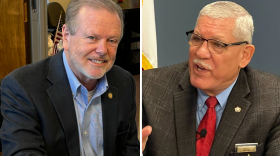 Senate leader Phil Berger is calling for a second recount in his close Republican primary race with Rockingham County Sheriff Sam Page. A machine recount wrapped up Thursday without changing Page's 23-vote lead. But state law allows Berger to seek a hand-to-eye recount of randomly selected ballots, a process that would likely begin next week.
 -
 A machine recount is underway following the state's normal procedure, but Senate leader Phil Berger wants election officials to perform a hand-to-eye recount on certain types of ballots.
 -
 Senate leader Phil Berger’s primary campaign raised 34 times as much money as his challenger, Rockingham County Sam Page, but Page’s candidacy was boosted by four outside groups — most of which haven’t disclosed much about their donors and spending.
 -
 Berger filed four protests Tuesday. He also requested a machine recount in the race, which began Tuesday in Guilford County.
 -
 Berger, North Carolina's longtime state Senate leader, trails by 23 votes after the county canvass. His campaign says some voters in Guilford County who should have had that senate district on their ballots swear they did not.
 -
 As a recount (and possible election legal challenges) loom in the close primary between Senate leader Phil Berger and Rockingham County Sheriff Sam Page, Page is raising concerns over whether the process can be handled fairly.
 -
 State Sen. Graig Meyer, D-Orange, announced Monday that he'll resign from the Senate later this month. The Democrat is leaving the legislature to take a new job as executive director of the North Carolina Justice Center, a left-leaning advocacy group.
 -
Fewer than 20,000 voters participate in a typical state Senate primary, but GOP primary voters in two counties will have a major impact on the power dynamics in the state legislature.
-
 A newly formed political action committee plans to spend millions of dollars to attack Senate leader Phil Berger's Republican opponent in next year's primary.
 -
 N.C. Senate leader Phil Berger said Thursday that the legislature might redraw the state's Congressional districts in response to partisan gerrymandering efforts in other states.

© 2026 WUNC News
120 Friday Center Dr
Chapel Hill, NC 27517
919.445.9150 | 800.962.9862
120 Friday Center Dr
Chapel Hill, NC 27517
919.445.9150 | 800.962.9862
Play Live Radio
Next Up:
0:00
0:00
Available On Air Stations


