

It’s a sunny cool morning at New Hope Bottomlands Trail in Durham in early November. A diverse group of about 20 volunteers ranging from a retired couple to a Ph.D. student at UNC-Chapel Hill meets in a parking lot next to a soccer field.
They're greeted by Kaitlyn Elliot, the water quality program manager at the Haw River Assembly, an environmental non-profit based in Chatham County.
These volunteers are here to attend a training that will allow them to join the Haw River Watch Program and to learn how to monitor the health of local waterways. For more than two decades, the program has collected over 2,300 data points across almost 285 sites in the area. This information is available online and is also submitted to the state.

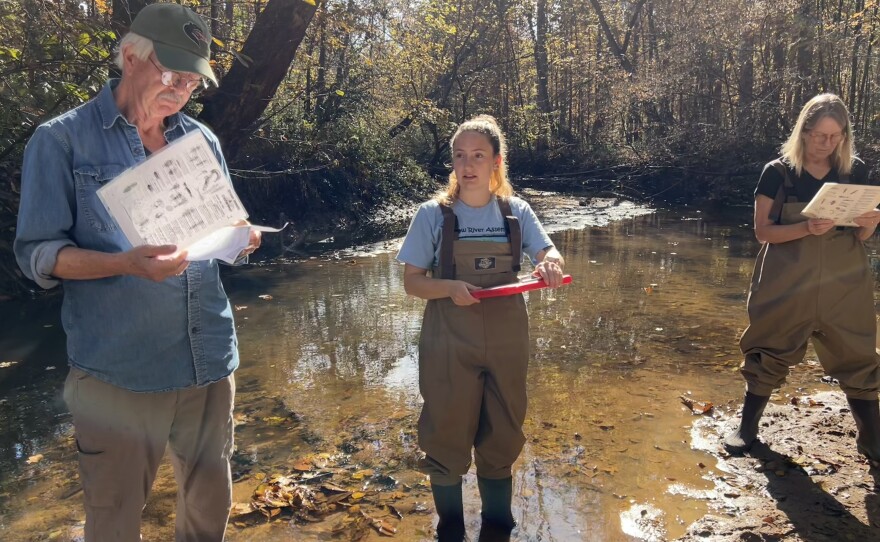
Once everyone arrives, the group sets off down a trail. It’s a brisk, 10 minute walk to a quiet section of New Hope Creek. Elliot gives everyone a survey sheet to fill out. She explains all the different information River Watchers need to gather, including date and location, air temperature, and the PH level of the water.
"Next, we’re going to talk about the macroinvertebrates. This is the really, really fun part, where we’re going to get into the stream and look for them," Elliot said to the group excitedly. "But first, I’m going to pass around another sheet that will help us with identification."
This second sheet lists the various types of macroinvertebrates that volunteers might find. Some of these small organisms are more tolerant to pollution, while others are more sensitive. Depending on which ones are found, that helps determine how healthy or polluted the water is.
Finally, the group spreads out across the water and starts hunting for these tiny critters, like stoneflies and crayfish.

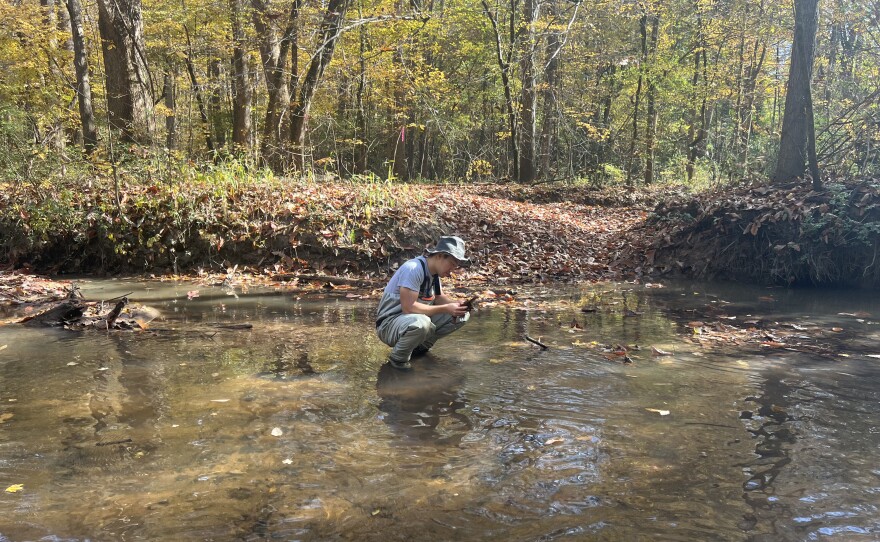
Corey Reaves, an intern with the Haw River Assembly, quickly finds a mayfly about the size of his pinky nail. Nearby, Elliot helps volunteer Sandra Woolson identify a burrowing dragonfly she found in the sand. Elsewhere, Julia Soplop’s 9-year-old daughter Piper is poking her net under some logs.
Soplop is here with Piper and her other two daughters: 13-year-old Nora and 15-year-old Cricket. She says her family lives around the Haw River near Bynum in Chatham County.
"We spend a lot of time hiking and ... kayaking. We thought that it was about time we did something to help the health of the river," said Soplop with a laugh.
She and her daughters plan to join an established River Watch team to monitor Moat’s Creek in Saxapahaw. She adds it's a relief to find something the whole family can do together, despite the age differences.
"It’s really fun to see them engaged and excited about doing this," said Soplop.


The data that volunteers like the Soplops collect is used by state officials at the Division of Water Resources. In an emailed statement, spokesperson Laura Oleniacz said the data helps evaluate "water quality trends as part of the basin planning process in areas where the state does not have an established monitoring station, or to indicate where additional monitoring by the state might be needed."
The information gathered by River Watchers is also helping Anh Quach, a third-year Ph.D. student at UNC-Chapel Hill. The program is helping him study how invasive clams in streams and rivers displace native species and contribute to greenhouse gas emissions.
"It’s a collaboration, right? I’m helping the Haw River Assembly monitor the invasive species ... but at the same time I also get the data for my own work," explained Quach.
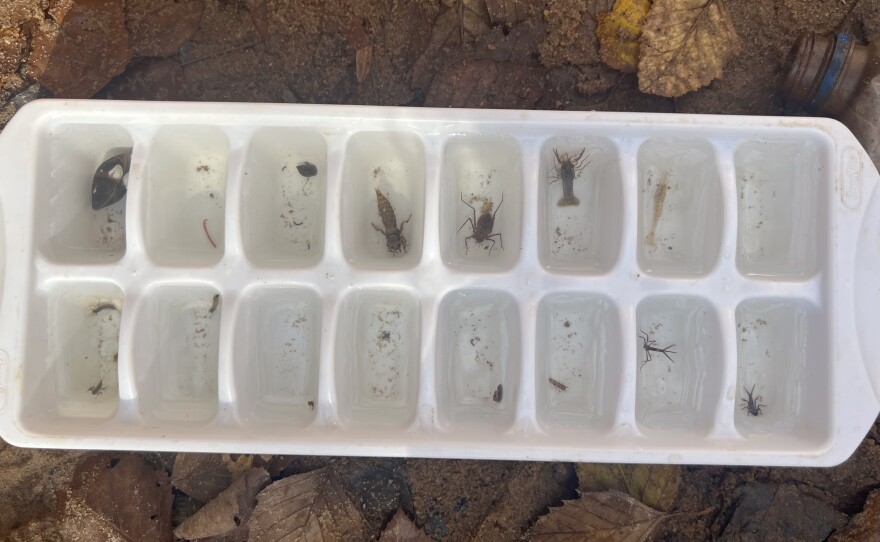

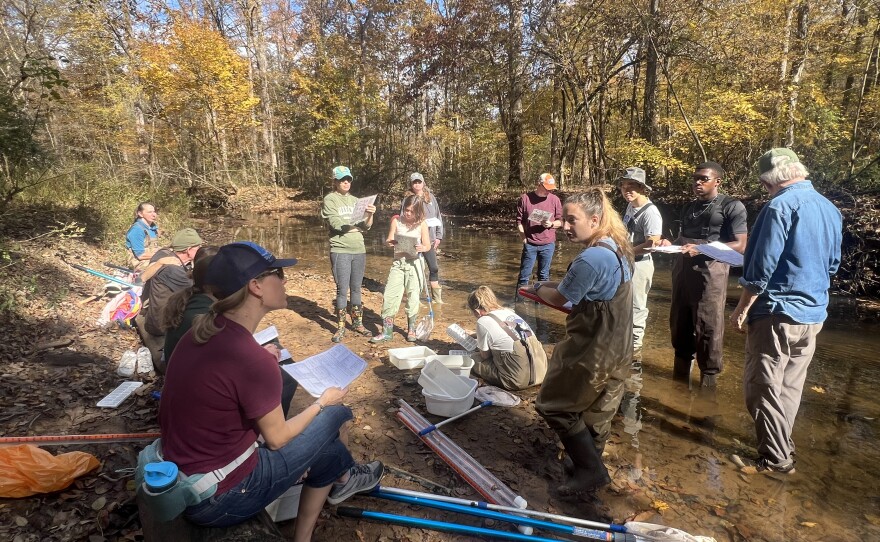
After looking around for about 30 minutes, Elliot regroups the volunteers to review what they found. Perhaps the most exciting discovery was a freshwater shrimp.
After identifying all the macroinvertebrates, the group gets ready to hike back to the parking lot. But first, Environmental Educator Jessica Black with the Haw River Assembly thanks everyone for coming.
"I just think it's very commendable [for y'all] to take your time to do this for our area," said Black. "[This] does make a difference. Y’all are very valuable and what y’all are doing is very valuable. Thanks y'all."


